Artificial intelligence is becoming an essential part of modern technology. From AI writing tools and coding assistants to business automation and intelligent chatbots, AI is helping people work faster and solve complex problems. However, an important question remains: Should you run AI locally on your own device or use cloud-based AI services? The debate around […]

Tag: Generative AI
AI Employees vs AI Assistants: What’s the Difference?
Artificial intelligence is changing how businesses create content, manage customers, analyze data, and automate everyday tasks. While AI assistants have already become popular productivity tools, a new concept is gaining attention: AI employees. But what exactly is the difference between AI employees and AI assistants? Are AI employees simply advanced virtual assistants, or can they […]
AI Video Generators in 2026: What Has Changed?
AI video generation has changed dramatically in a short period of time. A few years ago, creating an AI video usually meant entering a text prompt, waiting for a short clip, and accepting whatever the model produced. Characters could change appearance, hands and objects often looked unnatural, motion was inconsistent, and most generated videos had […]
Open-Source AI vs. Closed-Source AI: Which Future Will Win?
Artificial intelligence is entering a new phase in 2026. The biggest question is no longer simply which AI model is the most powerful. Businesses, developers, governments, and individual users are increasingly asking a deeper question: Should the future of AI be open or closed? Open-source and open-weight AI models are becoming increasingly capable, while proprietary […]
ChatGPT vs Claude vs Gemini in 2026: Which AI Is Best?
Artificial intelligence has moved far beyond simple chatbots. In 2026, AI assistants can write articles, analyze documents, create images, generate code, research complex topics, use tools, work with large files, and even complete multi-step tasks. Three names continue to dominate the conversation: ChatGPT, Claude, and Gemini. But which AI is actually the best in 2026? […]
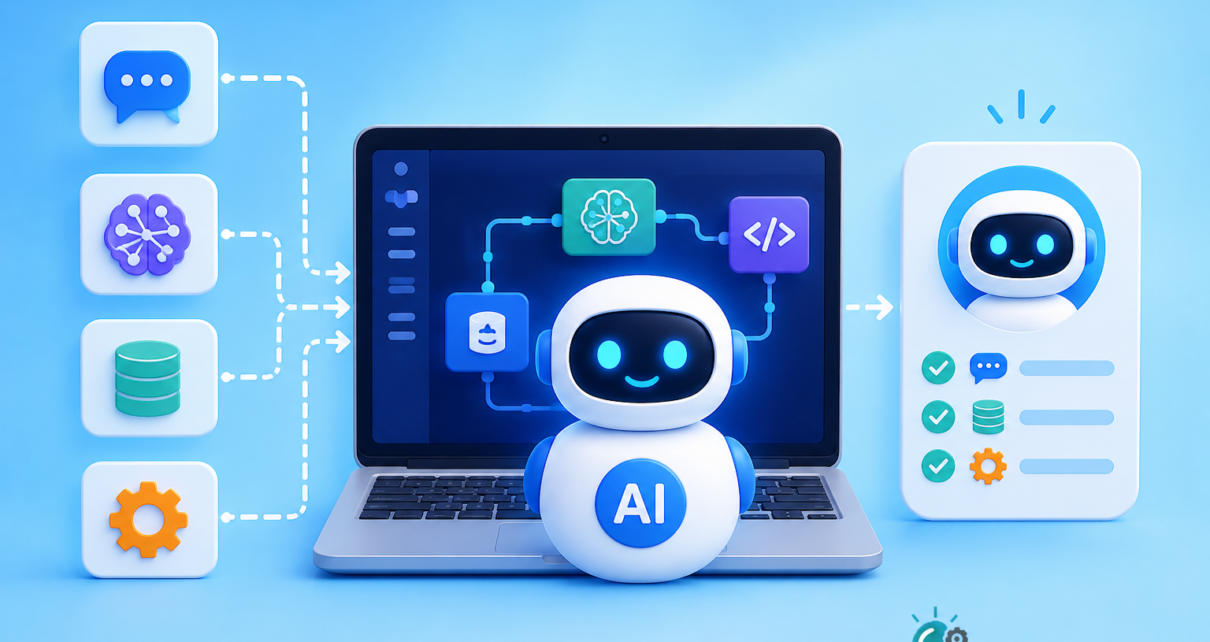
How to Build an AI Agent in 2026: A Beginner-Friendly Guide
Artificial intelligence is moving beyond simple chatbots. In 2026, one of the biggest trends in AI is the rise of AI agents—systems that can understand a goal, make decisions, use tools, and complete tasks with limited human intervention. You may have already used an AI agent without realizing it. An AI system that researches information, […]
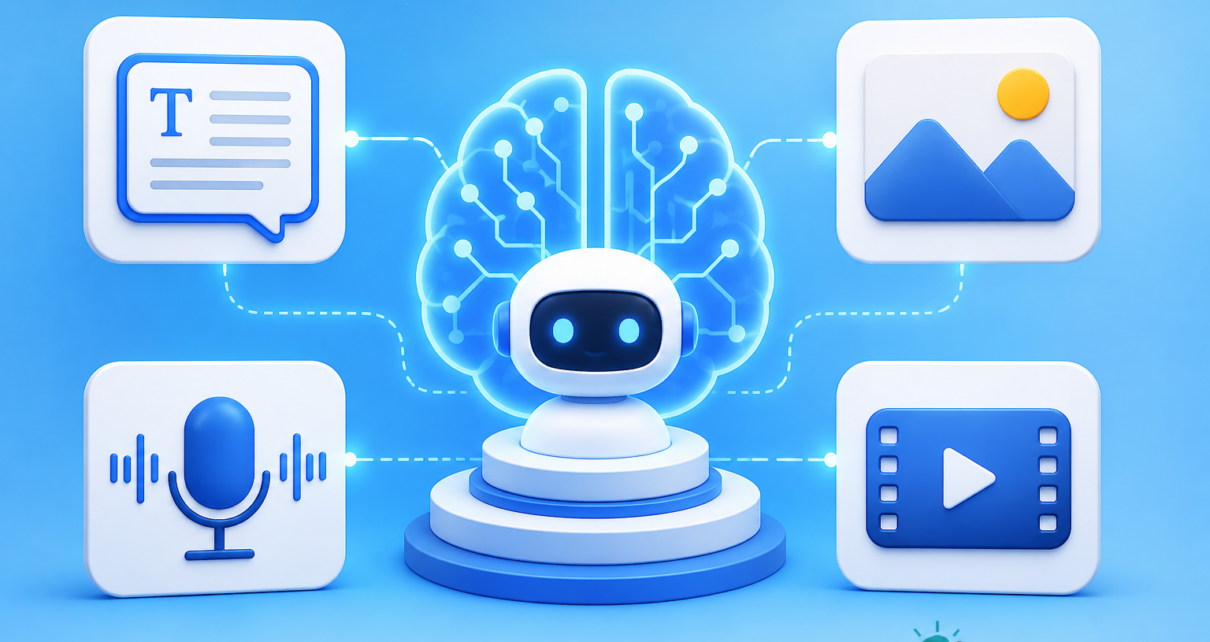
Multimodal AI Explained: How Text, Image, Audio & Video AI Work Together
Artificial intelligence is moving beyond text. Earlier AI systems were often designed to handle one type of information at a time. A language model could understand text, an image model could analyze pictures, and speech AI could convert audio into words. Today, a new generation of AI can work with text, images, audio, video, and […]
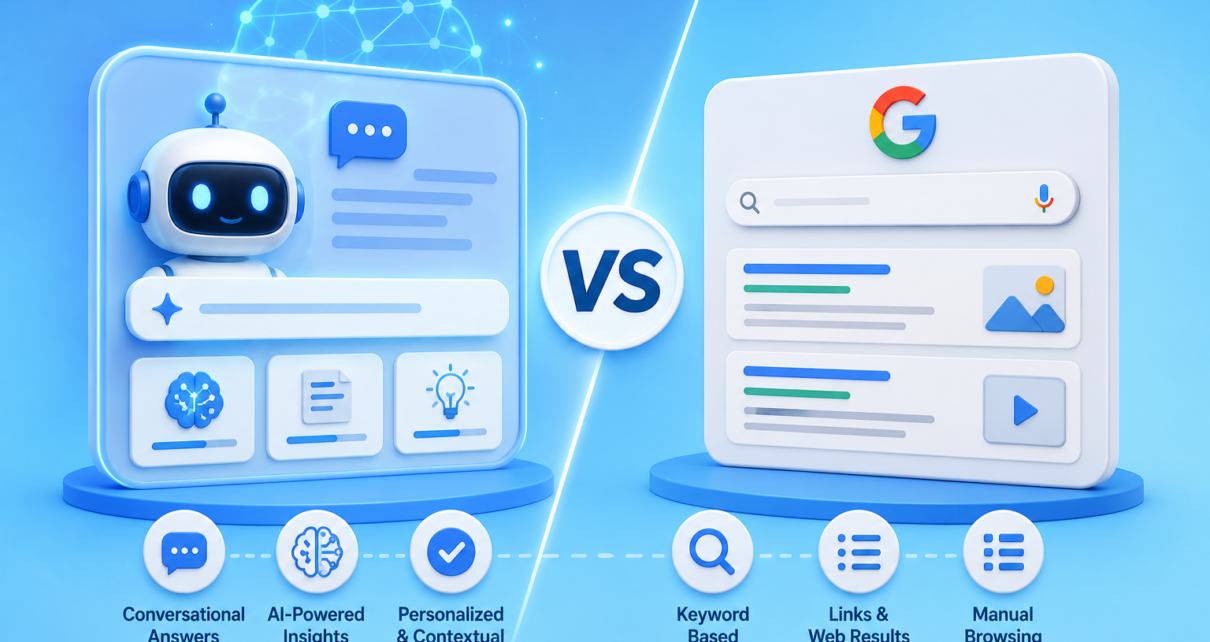
AI Search vs Google Search: How Search Is Changing in 2026
Search is changing faster in 2026 than at almost any point in web history. For more than two decades, Google Search trained users to enter keywords, scan a list of blue links, compare websites, and click through to find an answer. Today, generative AI is transforming that model. Instead of simply asking, “Which webpage has […]
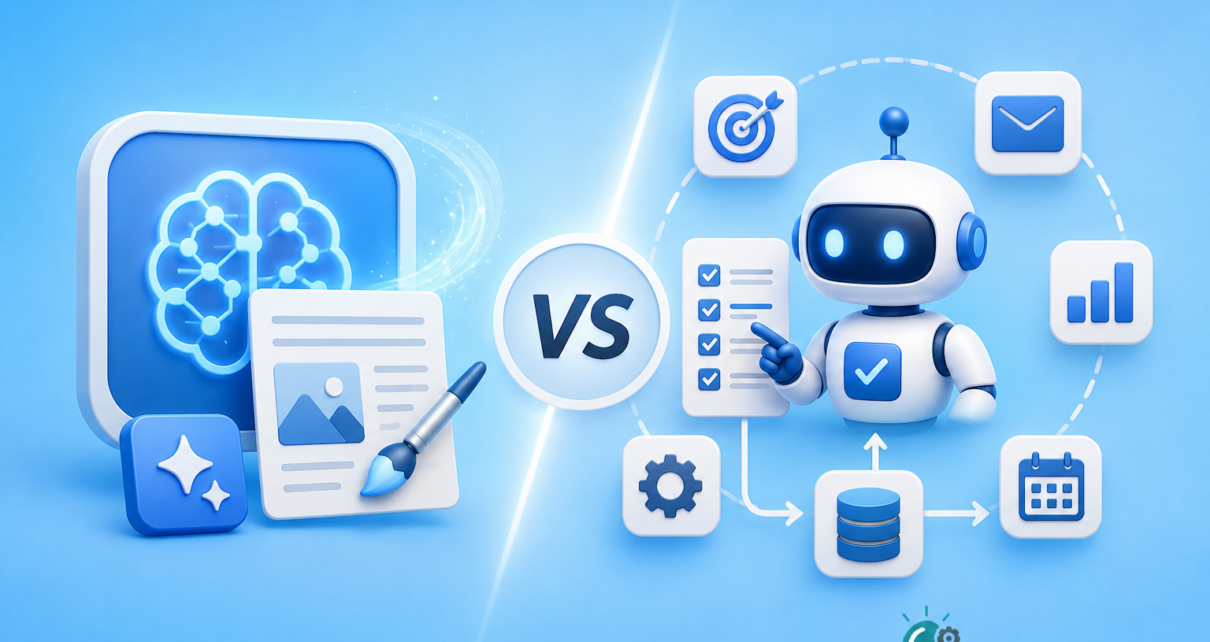
Generative AI vs AI Agents: What’s the Difference in 2026?
Artificial intelligence is moving into a new phase in 2026. For the past few years, Generative AI has dominated the conversation by helping people write content, create images, generate code, summarize documents, and answer questions. Now, another term is becoming just as important: AI agents. But what exactly is the difference between Generative AI and […]
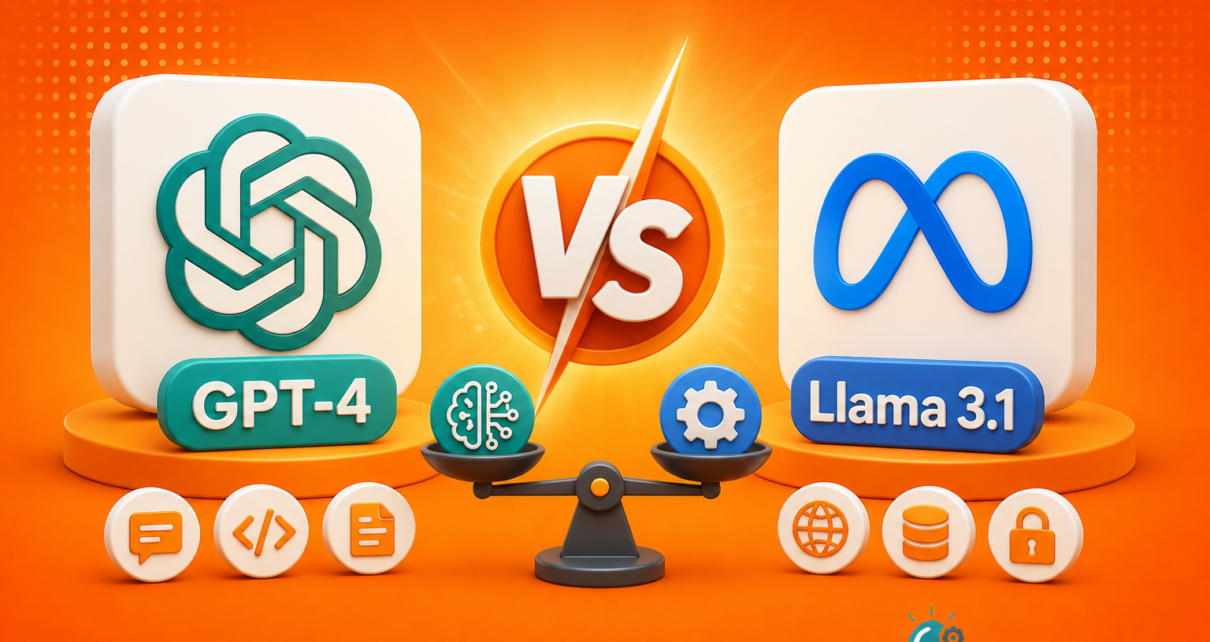
GPT-4 or Llama 3.1: Which AI Model Is Right for You?
Artificial intelligence has changed dramatically with the rise of powerful large language models (LLMs). Two models that have attracted significant attention in the modern AI race are OpenAI’s GPT-4 and Meta’s Llama 3.1. At first glance, comparing them seems straightforward: GPT-4 is a proprietary model developed by OpenAI, while Llama 3.1 is Meta’s open-weight model […]