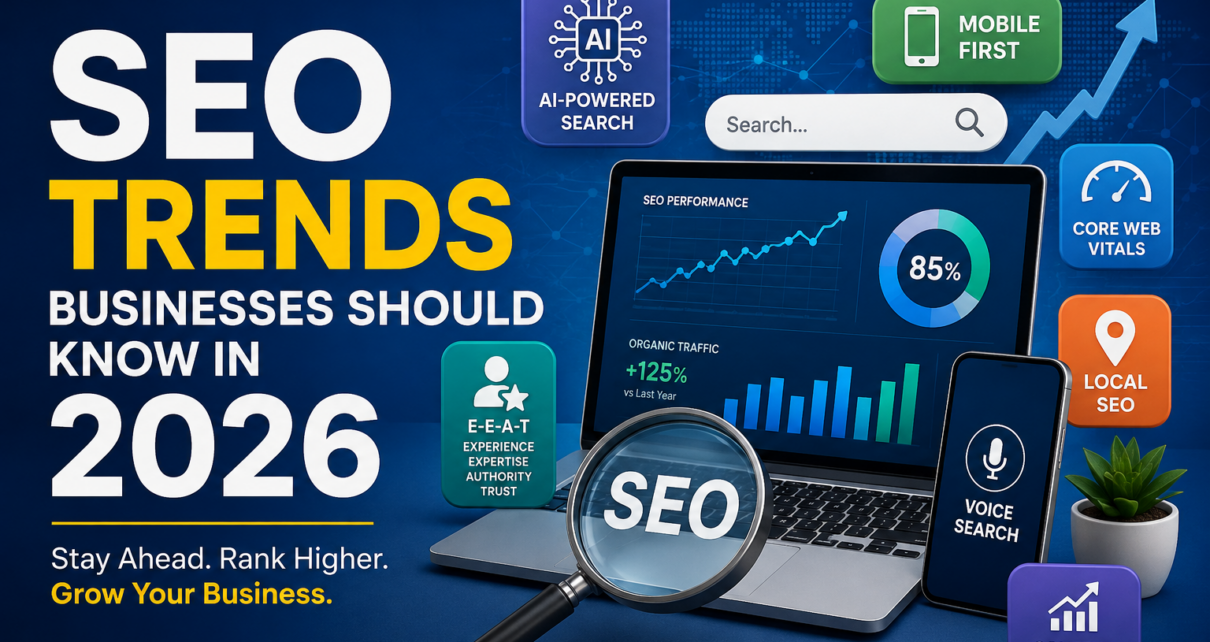
Search Engine Optimization (SEO) has changed dramatically over the past few years, and 2026 continues that transformation. Search engines are smarter than ever, AI-generated search results are becoming common, and user experience plays a larger role in determining rankings.
Businesses that continue using outdated SEO strategies risk losing visibility, while those adapting to new trends can enjoy sustainable organic growth, increased traffic, and higher conversions.
In this guide, we’ll explore the most important SEO trends every business should know in 2026 and how you can prepare your website for long-term success.
Why SEO Matters More Than Ever
Consumers rely on search engines to discover products, compare services, and make purchasing decisions. Whether you’re a local business, eCommerce brand, startup, or enterprise, SEO remains one of the highest ROI digital marketing strategies.
Benefits include:
- Increased organic traffic
- Higher-quality leads
- Better brand authority
- Lower customer acquisition costs
- Long-term online visibility
However, the rules have evolved significantly.
1. AI-Powered Search Is Changing Everything
Artificial Intelligence is now deeply integrated into search engines.
Instead of simply displaying ten blue links, search engines increasingly generate AI-powered summaries that answer user queries instantly.
What Businesses Should Do
- Write content that answers real customer questions.
- Use clear headings and structured formatting.
- Include FAQs.
- Publish original insights instead of generic content.
- Add expert opinions and real-world examples.
AI rewards helpful, trustworthy, and comprehensive content.
2. Topical Authority Beats Keyword Stuffing
Creating dozens of random articles no longer works.
Instead, businesses should build topical authority by covering an entire subject in depth.
For example, a WordPress agency should create content around:
- WordPress Development
- Plugin Development
- Website Speed Optimization
- Security
- WooCommerce
- Theme Customization
- WordPress SEO
Search engines recognize websites that demonstrate expertise across an entire topic.
3. User Experience (UX) Is a Major Ranking Factor
Search engines now evaluate how users interact with websites.
Important UX factors include:
- Fast loading speed
- Mobile responsiveness
- Easy navigation
- Readable typography
- Clear calls to action
- Minimal intrusive pop-ups
Happy users usually lead to better rankings.
4. Core Web Vitals Still Matter
Performance remains a crucial SEO factor.
Focus on improving:
- Largest Contentful Paint (LCP)
- Interaction to Next Paint (INP)
- Cumulative Layout Shift (CLS)
Optimization Tips
- Compress images
- Use modern image formats like WebP
- Enable browser caching
- Minify CSS and JavaScript
- Use a CDN
- Choose fast hosting
5. Search Intent Is More Important Than Keywords
Ranking isn’t just about keywords anymore.
Search engines aim to understand why users are searching.
There are four major search intents:
Informational
“How does SEO work?”
Commercial
“Best SEO companies”
Transactional
“Buy SEO services”
Navigational
“Ahrefs login”
Create content that matches the user’s intent rather than focusing solely on keyword density.
6. EEAT Continues to Grow in Importance
Google values:
- Experience
- Expertise
- Authoritativeness
- Trustworthiness
Businesses should:
- Display author bios
- Showcase certifications
- Publish original research
- Include customer testimonials
- Highlight awards and achievements
- Keep contact information updated
Trust is becoming a competitive advantage.
7. High-Quality Content Wins
Thin content is becoming increasingly ineffective.
Great content should be:
- Comprehensive
- Well researched
- Easy to understand
- Updated regularly
- Supported by visuals
- Actionable
Long-form guides often outperform short articles because they answer more user questions.
8. Voice Search Continues to Expand
Smartphones, smart speakers, and AI assistants have increased voice searches.
Optimize for conversational queries.
Instead of:
SEO agency
Target:
Which SEO agency is best for small businesses?
Use natural language throughout your content.
9. Video SEO Is Becoming Essential
Videos often appear in search results.
Businesses should:
- Create tutorials
- Product demonstrations
- Customer testimonials
- Industry explainers
- Educational content
Optimize videos with:
- Descriptive titles
- Keyword-rich descriptions
- Closed captions
- Custom thumbnails
10. Local SEO Keeps Growing
For local businesses, local SEO remains essential.
Optimize your:
- Business Profile
- Local citations
- Customer reviews
- NAP consistency
- Location pages
Use local keywords such as:
- SEO Company in New York
- Web Design Agency in Toronto
11. Structured Data Improves Visibility
Schema markup helps search engines better understand your content.
Useful schema includes:
- FAQ Schema
- Article Schema
- Organization Schema
- Product Schema
- Review Schema
- Breadcrumb Schema
Structured data can improve visibility in rich search results.
12. Mobile-First Optimization Is Mandatory
Most users browse on mobile devices.
Your website should offer:
- Responsive design
- Fast loading
- Large buttons
- Readable fonts
- Simple navigation
A poor mobile experience can significantly impact rankings.
13. Link Quality Matters More Than Quantity
Backlinks remain important, but quality outweighs quantity.
Focus on earning links from:
- Industry publications
- Trusted blogs
- News websites
- Relevant directories
- Business partnerships
Avoid spammy link-building tactics.
14. Fresh Content Performs Better
Regularly update existing content.
Refresh:
- Statistics
- Screenshots
- Pricing
- Examples
- Internal links
- FAQs
Content freshness signals relevance.
15. AI Content Requires Human Editing
AI tools can speed up content creation, but publishing AI-generated text without review often leads to mediocre results.
Always:
- Fact-check information
- Add original insights
- Include real examples
- Improve readability
- Remove repetitive sections
Human expertise remains essential.
SEO Checklist for Businesses in 2026
✔ Publish helpful, in-depth content
✔ Improve page speed
✔ Optimize Core Web Vitals
✔ Build topical authority
✔ Earn high-quality backlinks
✔ Use schema markup
✔ Optimize for AI search
✔ Focus on EEAT
✔ Improve user experience
✔ Regularly update content
✔ Optimize for voice search
✔ Strengthen local SEO
Common SEO Mistakes to Avoid
- Keyword stuffing
- Buying low-quality backlinks
- Ignoring mobile users
- Publishing duplicate content
- Slow-loading pages
- Outdated articles
- Weak internal linking
- Poor site structure
- Neglecting technical SEO
- Forgetting search intent
Frequently Asked Questions
What is the biggest SEO trend in 2026?
AI-powered search experiences, user-focused content, and demonstrating expertise are among the biggest trends shaping SEO in 2026.
Is SEO still worth investing in?
Yes. SEO remains one of the most cost-effective digital marketing channels for generating long-term organic traffic and qualified leads.
Does AI replace SEO?
No. AI changes how users discover information, but businesses still need optimized, trustworthy content and technically sound websites to remain visible.
How often should SEO content be updated?
Review important pages every 3–6 months and refresh them whenever information becomes outdated or search intent changes.
Is technical SEO still important?
Absolutely. Fast loading speeds, mobile optimization, secure websites, clean architecture, and structured data remain foundational to strong SEO performance.
Final Thoughts
SEO in 2026 is about creating genuinely helpful experiences for users. Businesses that combine high-quality content, excellent technical performance, strong topical authority, and trustworthy expertise will be better positioned to thrive in evolving search environments.
Rather than chasing shortcuts or outdated tactics, invest in a long-term SEO strategy focused on solving customer problems, improving usability, and building authority. As search technology continues to evolve, businesses that prioritize value and credibility will remain competitive and continue attracting sustainable organic traffic.