


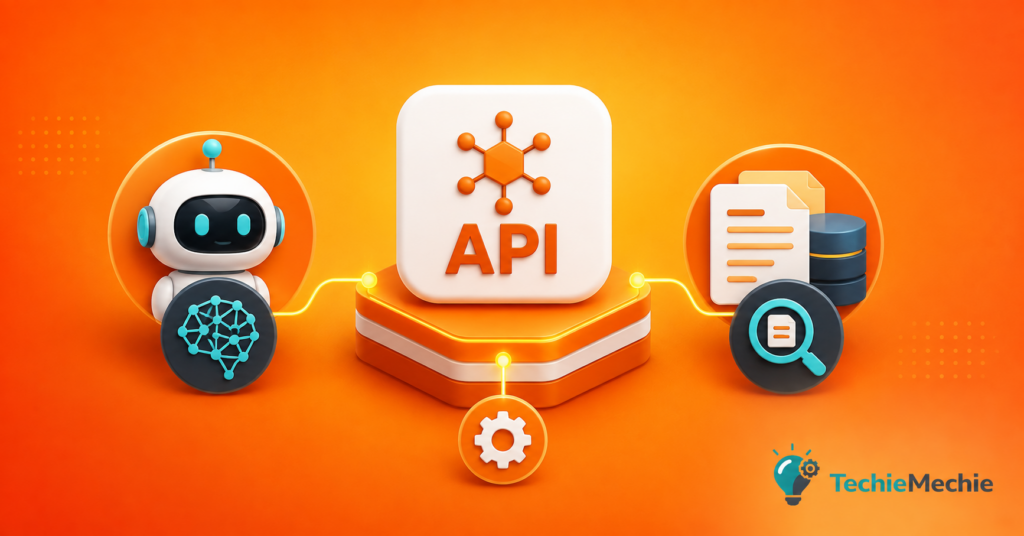
AI agents are moving beyond simple chat interfaces. In 2026, businesses are building agents that can search CRM records, update tickets, send emails, retrieve documents, create tasks, monitor events, and make decisions using data from dozens of SaaS applications.
That creates a major infrastructure challenge: how do you reliably connect an AI agent to hundreds or thousands of external APIs without building and maintaining every integration yourself?
This is where a unified API platform for AI agents and RAG becomes valuable.
A modern unified API platform can handle authentication, API connections, tool calling, data synchronization, webhooks, triggers, and observability through a common integration layer. However, not every unified API is designed for AI. Traditional platforms often focus on normalized data and synchronization, while AI agents require reliable real-time actions and LLM-friendly tools.
Based on a comparison of leading platforms and the latest 2026 perspectives from Nango, Truto, and Composio, this guide explores the best options, what makes a unified API “AI-ready,” and which platform is best for different use cases.
What Is a Unified API for AI Agents?
A unified API provides one integration layer through which an application can communicate with multiple third-party services.
For example, instead of building separate integrations for:
- Salesforce
- HubSpot
- Pipedrive
- Slack
- Gmail
- Google Drive
- Jira
- GitHub
developers can use an integration platform that handles much of the underlying authentication and API infrastructure.
But AI-agent integrations are different from traditional unified APIs.
A conventional unified API might provide a standardized /contacts endpoint across multiple CRM systems. An AI agent, on the other hand, may need to perform a specific action such as:
Find the highest-value leads created this month, summarize their latest interactions, and create follow-up tasks for the sales team. That requires more than normalized data.
The platform needs to provide reliable tool execution, authentication, custom logic, error handling, pagination, triggers, and potentially data synchronization for RAG. Nango’s 2026 analysis specifically emphasizes unified authentication, custom tool calls, RAG data syncs, webhooks/triggers, and observability as core requirements.
Why AI Agents Need a Different Kind of API Platform
AI agents are non-deterministic. A developer defines what an agent can do, but the LLM decides which tools to call and when.
That introduces several challenges.
1. Authentication
Agents often act on behalf of individual users.
A SaaS application might have thousands of customers, each connecting their own Salesforce, Google, Slack, or Microsoft accounts.
Managing:
- OAuth authorization
- access tokens
- refresh tokens
- API keys
- JWTs
- credential storage
- token expiration
- tenant isolation
can quickly become a significant engineering burden.
A modern integration platform should abstract much of this complexity.
2. Tool Calling
LLMs need tools that are easy to understand and execute.
Instead of giving an agent an enormous collection of raw API endpoints, developers can expose purpose-built tools such as:
- search_customers
- create_support_ticket
- send_customer_email
- get_invoice_status
This allows deterministic logic to remain in application code instead of forcing the LLM to reason through every API detail.
Nango’s analysis argues that custom tool calls can improve reliability by moving deterministic logic outside the LLM’s reasoning loop.
3. Data Synchronization for RAG
RAG systems need current information.
If an AI assistant answers questions using outdated CRM records, documents, support tickets, or knowledge-base content, the answer may be inaccurate even if the language model itself performs perfectly.
A RAG-ready integration platform therefore needs capabilities such as:
- Scheduled synchronization
- On-demand synchronization
- Pagination
- Incremental updates
- Change detection
- Deduplication
- Deletion handling
These capabilities keep external data synchronized with the application’s retrieval layer.
4. Webhooks and Triggers
Agents should not always wait for a user prompt.
For example:
A customer submits a high-priority support ticket → trigger an AI workflow → analyze the issue → retrieve relevant account information → draft a response → notify the support manager.
This requires event-driven infrastructure.
Webhooks and polling triggers allow external events to initiate agent workflows.
5. Observability
When an AI agent fails, developers need to understand why.
Was the OAuth token expired?
Did the API reject the request?
Did the model select the wrong tool?
Was pagination handled incorrectly?
Did a webhook fail?
Did the external service return an unexpected response?
Structured logging and tracing are therefore essential for production AI agents.
Best Unified API Platforms for AI Agents & RAG in 2026
There isn’t one perfect platform for every AI application. Different platforms prioritize different parts of the integration problem.
1. Nango — Best Overall for AI Agents & RAG
Best for: AI products requiring custom tools, RAG synchronization, authentication, webhooks, and extensive API coverage.
Nango stands out when you need more than basic AI tool calling.
Its platform provides a unified layer for authentication, tool calls, data synchronization, and webhooks, with support for more than 900 APIs according to its 2026 comparison. It is also open source and code-first.
Key strengths
- 900+ APIs
- OAuth and API-key authentication
- Custom tool calls
- Native data synchronization
- Incremental sync
- Webhooks
- Triggers
- MCP server
- Observability
- Open-source components
- Code-first development
- AI coding-agent support
One of Nango’s biggest advantages is its combination of agent tool calling and RAG data synchronization.
That makes it particularly attractive when the same product needs both:
“Take an action in Salesforce.”
and:
“Keep Salesforce data synchronized with our RAG database.”
Nango also emphasizes using coding agents such as Claude Code and Cursor to create and modify integrations.
Potential limitation
Nango’s code-first approach is excellent for engineering teams but may be less attractive for teams looking primarily for a visual, no-code workflow builder.
Best overall choice: Teams building serious AI agents and RAG applications that need customization and control.
2. Composio — Best for Agent-First Tool Calling
Best for: Developers building AI agents that need many ready-to-use tools and integrations.
Composio approaches the problem from an agent-first perspective.
Its platform focuses on managed authentication, LLM-optimized tools, tool execution, event-driven workflows, and integrations for AI frameworks. The company’s 2026 comparison emphasizes multi-tenant authentication, agent-ready tools, event triggers, intelligent tool routing, sandboxed execution, and framework agnosticism.
Composio is particularly useful when the primary requirement is:
“Give my AI agent access to lots of applications and actions quickly.”
Its connector ecosystem includes hundreds of integrations, while its tooling is designed to make third-party actions available to LLMs. Another 2026 comparison describes Composio as having more than 1,000 pre-built connectors, showing how rapidly its integration catalog has expanded.
Key strengths
- Large connector ecosystem
- Managed OAuth
- LLM-optimized tools
- SDKs
- MCP support
- Agent framework integrations
- Observability
- Sandboxed execution
- Event-driven capabilities
- Multi-tenant authentication
Potential limitation
Composio is more focused on agent actions and tool execution than being a complete RAG data synchronization platform.
Its Tool Router is also described as being in beta in the Composio comparison, so teams depending heavily on that particular capability should verify its current maturity.
Best for: AI assistants and autonomous agents that need broad application connectivity and fast tool deployment.
3. Truto — Best for Flexible API Access and Zero-Code Architecture
Best for: Teams wanting flexible proxy APIs, raw provider data, and declarative integration infrastructure.
Truto takes a different architectural approach.
Instead of forcing every provider into a rigid lowest-common-denominator schema, Truto exposes underlying APIs through proxy APIs while handling integration infrastructure such as OAuth, token refresh, rate limits, and pagination.
Its Agent Toolsets can dynamically expose APIs as LLM-callable tools with names, descriptions, and JSON schemas.
This is useful because AI agents sometimes need access to provider-specific fields and objects that a generic normalized schema may not represent.
Key strengths
- Zero-code/declarative architecture
- Proxy APIs
- Automatic OAuth handling
- Token refresh
- Rate-limit handling
- Pagination
- LLM tool generation
- MCP support
- Access to native provider data
Potential limitation
Truto is particularly compelling for API execution and flexibility, but teams looking for sophisticated native RAG synchronization should carefully compare its data-sync capabilities with platforms such as Nango.
Best for: Teams wanting maximum flexibility without building large amounts of integration-specific code.
4. Pipedream Connect — Best for Low-Code Integrations
Best for: Developers wanting a large integration catalog and low-code workflows.
Pipedream Connect provides access to a very large number of APIs and pre-built actions.
Its strength is convenience.
Rather than building every integration manually, developers can use existing actions and workflows to connect applications to AI agents.
Nango’s comparison positions Pipedream Connect as particularly useful for teams looking for a low-code interface with many pre-built actions and MCP support. However, it does not provide native RAG data synchronization in the same way as Nango.
Best for
- Rapid prototypes
- Low-code workflows
- Large connector requirements
- Pre-built actions
- Teams that don’t need sophisticated RAG synchronization
5. Merge Agent Handler — Best for Pre-Built Agent Tool Packs
Best for: Businesses that want ready-made agent tools rather than highly customized integrations.
Merge has traditionally focused on unified APIs and normalized data across categories such as HRIS and accounting.
Its Agent Handler adds an AI-focused layer, including tool packs and a playground for testing.
However, according to Nango’s 2026 comparison, Merge Agent Handler is more appropriate when basic pre-built tool requirements are sufficient and does not provide native RAG data synchronization.
Best for
- Existing Merge users
- Traditional B2B SaaS integrations
- Pre-built agent actions
- HRIS and accounting use cases
6. Arcade — Best for Lightweight Tool Calling
Best for: Stateless AI agents that need tool execution and MCP-native authentication.
Arcade focuses on the runtime side of AI tool calling.
Its lightweight architecture can be attractive when your primary requirement is letting an AI agent securely execute external actions without needing a large data synchronization platform.
However, the Nango comparison notes that Arcade does not provide the same native RAG synchronization or webhook capabilities.
Best for
- Lightweight agents
- Tool calling
- MCP-oriented architectures
- Stateless workflows
- Low-latency execution
7. StackOne — Best for Enterprise-Focused Execution
StackOne is another option worth considering, particularly for enterprise AI integrations.
Truto’s 2026 comparison highlights StackOne’s focus on managed execution and security, including prompt-injection defenses. It is especially relevant for organizations that prioritize enterprise controls and specialized integration requirements.
It may be particularly attractive when security and controlled execution are more important than having the broadest possible general-purpose connector ecosystem.
Unified API Platforms Comparison
| Platform | Best For | AI Tools | RAG Sync | MCP | Auth | Customization |
| Nango | AI agents + RAG | Excellent | Yes | Yes | Excellent | High |
| Composio | Agent actions | Excellent | Limited focus | Yes | Excellent | High |
| Truto | Flexible API access | Excellent | Not primary focus | Yes | Excellent | Very High |
| Pipedream | Low-code integrations | Excellent | Limited | Yes | Good | Medium |
| Merge | B2B data + pre-built tools | Good | Limited | Yes | Good | Lower |
| Arcade | Lightweight tool calling | Excellent | No | Yes | Excellent | High |
| StackOne | Enterprise execution | Excellent | Use-case dependent | Yes | Strong | High |
The exact feature set and connector counts can change quickly, so teams should validate current documentation and pricing before selecting a production platform. The comparison above synthesizes the capabilities described in the referenced 2026 analyses.
What Makes the Best Unified API for RAG?
RAG introduces requirements that simple tool-calling platforms may not address.
A good RAG integration layer should support:
Incremental synchronization
Instead of downloading everything repeatedly, the system should identify what changed.
Pagination
Large SaaS datasets may contain thousands or millions of records.
Deduplication
The same content should not unnecessarily enter the retrieval database multiple times.
Change detection
The system needs to recognize modified or deleted records.
Scheduled synchronization
Data may need to be refreshed every few minutes, hours, or days depending on the use case.
Real-time webhooks
For important information, waiting for the next scheduled sync may be too slow.
These requirements make Nango particularly interesting for RAG-heavy applications, because its platform explicitly combines tool calling with native data synchronization capabilities.
How to Choose the Right Unified API Platform
Before choosing a provider, ask these questions.
Do you need RAG?
If your application needs continuous synchronization of SaaS data into a vector database or retrieval system, prioritize platforms with native data-sync infrastructure.
Do you need hundreds of agent actions?
If the main requirement is giving an agent access to many applications, a tool-focused platform such as Composio may be a better fit.
Do you want custom tools?
If your agent needs highly specific business logic, choose a platform that lets developers define custom tools rather than forcing the LLM to chain generic API endpoints.
Do you prefer low-code?
Pipedream and similar platforms can reduce development effort for teams that prefer visual or pre-built workflows.
Do you need raw API responses?
If provider-specific fields and custom objects are important, a flexible proxy architecture such as Truto’s can be attractive.
Do you need enterprise security?
Look for:
- Tenant isolation
- Secure credential storage
- OAuth management
- Audit logs
- Rate-limit handling
- Prompt-injection protections
- Sandboxed execution
- Observability
- Deployment flexibility
Unified API vs MCP: What’s the Difference?
MCP and unified APIs solve related but different problems.
A unified API provides an integration layer between your application and multiple third-party services.
MCP, or Model Context Protocol, provides a standardized way for AI applications to discover and interact with tools and resources.
In a modern architecture, you can use both.
For example:
User → AI Agent → MCP → Unified API → Salesforce/Slack/GitHub
This approach allows the AI system to discover tools through MCP while the integration layer handles authentication, API differences, synchronization, and execution.
However, exposing hundreds of generic tools to an LLM can create tool-selection problems. Nango’s analysis recommends carefully designed custom tools and limiting the tools available to the model for more reliable execution.
Final Verdict: What Is the Best Unified API Platform in 2026?
The answer depends on what you’re building.
Best overall for AI agents + RAG: Nango
Nango is the strongest choice when your application needs custom agent tools, RAG data synchronization, authentication, webhooks, MCP, and extensive API coverage in one code-first platform. Its combination of tool execution and data-sync infrastructure differentiates it from platforms primarily focused on agent actions.
Best for AI-agent tool calling: Composio
Choose Composio when your primary objective is giving AI agents access to a large collection of applications and actions with managed authentication and agent-oriented tooling.
Best for flexible API architecture: Truto
Truto is compelling for teams that want flexible access to native provider APIs, declarative integration infrastructure, and dynamically generated tools for LLMs.
Best for low-code integrations: Pipedream Connect
Pipedream makes sense when speed, pre-built actions, and low-code workflows are more important than sophisticated native RAG synchronization.
Best for specialized enterprise needs
StackOne and Merge can make sense when enterprise security, vertical specialization, or existing integration infrastructure are major considerations.
Conclusion
The best unified API platform for AI agents in 2026 is no longer simply the provider with the largest number of integrations.
AI agents need an integration layer designed around actions, authentication, context, reliability, and execution. RAG applications add another requirement: continuously synchronized data.
That changes how these platforms should be evaluated.
A strong AI-ready unified API should provide:
- Secure multi-tenant authentication
- Reliable LLM tool calling
- Custom tool development
- API error and rate-limit handling
- MCP support
- RAG-friendly data synchronization
- Webhooks and triggers
- Observability
- Scalability
- Framework flexibility
For applications combining AI agents and RAG, Nango is particularly strong because it brings authentication, custom tool calls, data synchronization, webhooks, and observability into a unified integration layer. For agent-first applications that prioritize broad tool availability, Composio is a strong alternative. Truto stands out for teams wanting flexible, declarative API access and generated LLM tools.
Ultimately, the right platform is the one that lets your engineering team spend less time maintaining OAuth flows and API integrations—and more time building the actual intelligence and business value of your AI product.